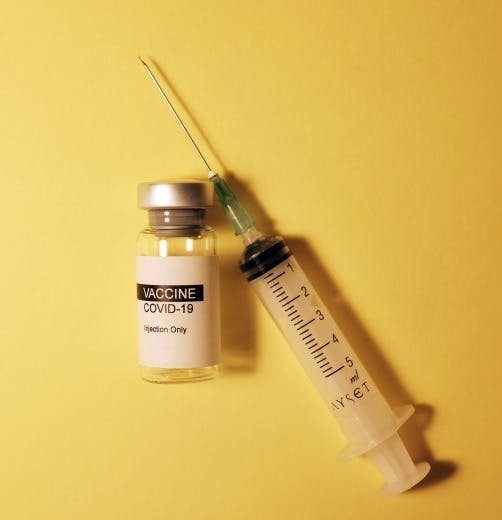

The rollout of the COVID vaccine has brought heated discussions about the effects of vaccines to the fore. The healthcare industry hasn’t always had the best track record when it comes to caring for women; from recalled birth control pills, the thalidomide scandal of the 1950s, and ignoring or misdiagnosing endometriosis or PCOS, it’s no wonder women might be sceptical of new healthcare initiatives.
As a result, worries about the COVID vaccine affecting fertility have been circulating the world over, despite a lack of evidence for this link. With this article, let’s break down these concerns, connect them to scientific research, and figure out whether the vaccine should concern those of us who are pregnant, nursing, or wish to one day have children. How does the vaccine work? Before we can look at the COVID vaccine’s potential impact on our health, it’s important to understand how it works in the first place. In messenger RNA (mRNA) vaccines, such as the ones made by Pfizer and Moderna, the jab gives our bodies instructions for producing a harmless protein that is unique to the COVID virus. After our cells make copies of the protein, the genetic material from the vaccine is destroyed. What remains is the knowledge to fight the COVID virus in the case of being infected in the future.
Vector vaccines, such as those made by AstraZeneca, take genetic material from the COVID virus and place them in a modified version of a different virus, known as a viral vector. This similarly creates instructions for your body to fight the COVID virus in the future.
In theory, how would the COVID vaccine affect fertility? Much of this fear comes from a misunderstanding of how your body reacts to the vaccine, and a false belief that the vaccine introduces lasting genetic material from COVID into the body. The COVID vaccine triggers an immune response in the body, leading some to believe that the vaccine could cause the body to attack syncytin-1, a protein in the placenta that shares a small piece of genetic code with a COVID spike protein. This attack would then theoretically decrease fertility.
However, endocrinologists have been quick to refute this concern, stating that your immune system is able to distinguish easily between the two proteins. While they share some genetic code, the construction of the syncytin-1 protein is very different, and your body can perceive this difference and knows better than to attack it. Another theory that caused worry at the start of the vaccine trials came from a misunderstanding of a Japanese study. This study involved injecting rats with a high dose of the vaccine—1,333 times greater than the dose given to humans.
The vaccine delivers the virus’s genetic material in a bubble of fat, which disperses throughout the body and is later destroyed. Scientists found that just over 50% of the total vaccine dose accumulated at the injection site after one hour, then going down to 25% after 48 hours. The liver was the next most common place for the dose to accumulate (16% after 48 hours) as this is where the body gets rid of waste from the blood. Only 0.1% of the dose ended up in the rats’ ovaries as it dispersed throughout the entire body after the injection.
This finding was highlighted by some publications to prove a potential fertility risk, but crucially there is no evidence of the virus’s genetic materialbeing found in the ovaries, rather only the fat used to deliver the genetic material upon injection. Failure of vaccine monitoring sitesThe use of monitoring sites to document side effects of the vaccine has also led to distorted claims about its impact on fertility and even miscarriages.
In the UK, the Medicines and Healthcare Regulatory Agency (MHRA) introduced such a scheme, and unfortunately saw miscarriages reported to the system. Monitoring sites rely on self-reporting, so they are not reliable at detecting an increase or decrease in common health issues—for example, someone may choose to report an irregular period to the system, but it is impossible to point to the vaccine as the culprit.
What these systems are useful for is detecting health anomalies, such as a spike in people experiencing blood clots after receiving the vaccine. But miscarriages are sadly common. If the number of miscarriages occurring post-vaccine starts to outnumber the number of miscarriages in the unvaccinated population, then there would be cause for concern. But so far, numbers are consistent between vaccinated and unvaccinated pregnant people.
The verdict - There has been no evidence linking the COVID vaccine to decreased fertility—in fact, pregnant women and those trying to become pregnant are encouraged by theNHSand other health organisations to get vaccinated, as they are at increased risk of contracting serious illness from COVID.
There is also no conceivable reason why the vaccine would pose a risk to fertility or pregnancy, and many obstetricians and gynaecologists are fighting hard to dispel myths based on misinformation. Some people may still choose to hold off on getting the vaccine while pregnant, pointing to limited studies involving pregnant women and the vaccine. This is because pregnant women are typically excluded from early clinical trials of any vaccine or medication. What’s important to note is that the studies that have been done with pregnant women have not shown any risk to fertility or pregnancy. There are still precautions that can be taken though.
The NHS recommends that pregnant women take a mRNA vaccine rather than a viral vector one, solely because mRNA vaccines have been used and studied more frequently in other countries and have not flagged any safety concerns. This does not mean that viral vector vaccines are less safe, only that they are under-researched compared to mRNA vaccines. Any health decision should be taken seriously, and it is important to be aware of potential risks. If you have lingering concerns about the COVID vaccine and fertility, chat to your GP or gynaecologist about the best course of action for your health. For the latest advice on the COVID vaccine and fertility, check out the guidance from the Royal College of Obstetricians and Gynaecologists.
Written by Emma Olsson
References
- Medicine-Thalidomide
- Different types of covid-19 vaccines
- Does covid 19 vaccine affect fertility? here’s what experts say
- Factcheck vaccine pregnancy
- What pregnant and breastfeeding women should know about the covid 19 vaccine
- Pregnancy breastfeeding fertility and coronavirus covid 19 vaccination
- covid-19-vaccines-pregnancy-and-fertility/
- https://files.catbox.moe/0vwcmj.pdf
- https://www.nejm.org/doi/pdf/10.1056/NEJMoa2104983?articleTools=true
- https://www.bbc.com/news/health-57552527
© 2026 Syrona Health. All rights reserved.